
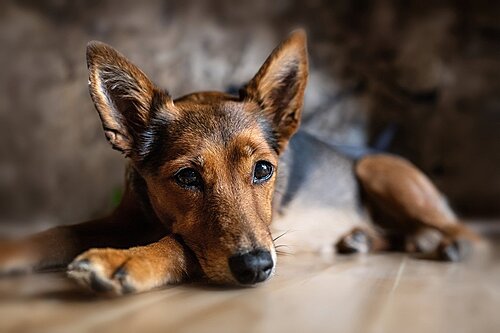
Your dog may know the holiday schedule changed before you consciously notice it.
You start staying up later.
Packages arrive.
Furniture moves.
Decorations appear.
Walks become shorter.
School schedules change.
Family visits.
Suitcases come out.
Food smells fill the kitchen.
You leave at unusual times.
You stay home on days you normally work.
Then you disappear for several hours.
Owners often tell us:
“My dog suddenly has separation anxiety.”
Maybe.
But that description moves too quickly from a behavior to a diagnosis.
The dog may be experiencing separation-related distress.
Attachment-related distress.
Isolation distress.
Confinement distress.
Frustration.
Environmental arousal.
Incomplete alone-time learning.
A disrupted elimination schedule.
Or a medical problem that happened to appear during the holidays.
Start with what changed.
Your Dog Lives Inside Your Routine
Dogs learn patterns extremely well.
Morning sounds.
Alarm clocks.
Coffee.
Shoes.
Keys.
School drop-off.
Work.
Meals.
Walks.
Bedtime.
When those patterns change, the dog receives different information.
That does not mean routine changes are harmful.
It means predictability is part of the environment.
The Three-Part Holiday Behavior Framework
Prevention
Protect the important routine anchors before the household becomes chaotic.
Keep predictable access to:
- Food.
- Water.
- Bathroom opportunities.
- Sleep.
- Rest.
- Exercise.
- Medication.
- Human interaction.
- Alone time.
You do not need an identical schedule every day.
You want enough predictability that your dog knows their basic needs will continue to be met.
Behavior Modification
Teach flexibility before you need it.
Practice:
- Different walk times.
- Short independent settling.
- Mat work.
- Being behind a gate while you remain nearby.
- Short departures.
- Returning calmly.
- Resting while you move around the house.
- Engaging with enrichment independently.
A flexible dog is not a dog with no routine.
It is a dog who understands the routine can vary without becoming unsafe or unpredictable.
Recovery
After visitors, travel, unusual activity or schedule changes, look at how the dog returns to normal.
Can they sleep?
Eat?
Eliminate normally?
Settle?
Spend time alone?
Return to familiar activities?
A dog who remains dysregulated after the event may need a lighter day rather than another activity.
“My Dog Is Clingy”
Clingy is everyday language.
Describe what you see.
Does the dog:
Follow you room to room?
Need physical contact?
Stand outside the bathroom?
Wake when you move?
Become distressed only when you leave?
Remain calm if another familiar person stays home?
Pace when departure cues appear?
Follow but relax when you are gone?
Those patterns are different.
Following You Does Not Diagnose Separation Anxiety
A dog who follows their person closely is not automatically a dog with separation anxiety.
Attachment behavior and separation distress are more complicated than physical proximity.
The most useful question is:
What happens when the dog is actually separated?
Video helps answer that.
Use Video Instead of Guessing
If you are concerned about separation-related behavior, record your dog during a real absence.
Observe:
What happens when you pick up keys?
When you put on shoes?
When you approach the door?
Immediately after leaving?
Ten minutes later?
Thirty minutes later?
Does the dog:
Settle?
Sleep?
Pace?
Pant?
Whine?
Bark?
Howl?
Scratch the door?
Destroy exit areas?
House-soil?
Scan continuously?
Stop eating?
Recover after several minutes?
Video provides information that a destroyed pillow cannot.
Separation-Related Distress Is the Better Starting Term
When owners say:
“My dog has separation anxiety,”
we should first ask what type of distress is occurring.
Possible patterns include:
Attachment-Related Distress
The dog appears particularly distressed when separated from a specific attachment figure.
Isolation Distress
The dog struggles with being alone but remains comfortable when another appropriate person is present.
Confinement or Barrier Distress
The problem becomes more intense behind a crate, gate, door or physical barrier.
Frustration-Related Behavior
Vocalization, scratching or destructive behavior may occur when access to a person, place or activity is blocked.
Incomplete Alone-Time Learning
Young puppies, newly adopted dogs and dogs whose household was rarely empty may never have developed comfortable independent-rest skills.
True Separation Anxiety
Some dogs experience significant anxiety related to separation.
These dogs deserve an individualized treatment plan rather than generic advice to “let them cry it out.”
Holiday Schedules Expose Weak Alone-Time Skills
Imagine the household pattern.
The family is home for four days.
The dog gets constant interaction.
Monday arrives.
Everyone leaves.
The change is large.
This does not mean people should avoid spending time with their dog during vacation.
It means maintaining some normal independent-rest opportunities may help preserve flexibility.
Prevent the Holiday Whiplash
During holiday breaks:
Let the dog nap independently sometimes.
Maintain normal bathroom opportunities.
Keep some walks close to the normal schedule.
Practice short separations where appropriate.
Allow your dog to rest while people are home.
Do not make every waking minute entertainment.
This is especially useful for puppies and adolescents.
Puppies Need Independent Rest Too
A puppy who spends every holiday moment being held, played with or followed by family members does not get many opportunities to practice:
Settling.
Sleeping independently.
Being behind a gate.
Being in another room.
Entertaining themselves appropriately.
Then the household suddenly returns to normal.
Build independence in small, safe increments rather than creating an abrupt change after the holiday.
House-Soiling During the Holidays
Owners may say:
“My dog is mad at us.”
Dogs do not need revenge to house-soil.
Look at the schedule.
Did the dog miss the normal walk?
Was the back door blocked by guests?
Did the dog hesitate to go outside because unfamiliar people were in the yard?
Was the puppy distracted?
Was the dog left alone longer?
Did eating times change?
Was there diarrhea after unusual food?
Did urination frequency increase?
Holiday house-soiling deserves investigation, not punishment.
Sudden House-Soiling Can Also Be Medical
A previously house-trained dog who suddenly begins eliminating indoors may need veterinary assessment.
Especially watch for:
- Frequent urination.
- Straining.
- Blood.
- Diarrhea.
- Increased thirst.
- Vomiting.
- Weakness.
- Pain.
- Significant appetite changes.
- Repeated episodes without an obvious schedule explanation.
For veterinary guidance and help deciding what level of care is appropriate:
“My Dog Is Acting Out”
Translate the label.
Instead of:
“My dog is acting out because our family is visiting.”
Try:
“My dog has been pacing every evening since our guests arrived and cannot settle after they go to bed.”
Now we can look at:
Sleep.
Environmental noise.
Visitor movement.
Rest opportunities.
Trigger stacking.
Physical discomfort.
Routine change.
Behavior becomes easier to address when we describe it accurately.
Holiday Sleep Matters
Dogs need uninterrupted opportunities to sleep.
Holiday houses often stay noisy later.
Children may wake sleeping dogs.
Guests move through normally quiet rooms.
Beds get relocated.
Crates get moved.
A dog may become increasingly irritable or reactive when normal rest disappears.
Protect sleep.
A sleeping dog does not need to participate in every holiday activity.
Travel Creates Another Routine Layer
If the dog travels with you, familiar routines become useful anchors.
Bring:
- Normal food.
- Medication.
- Leash and backup leash.
- Identification.
- Familiar bedding.
- A familiar enrichment item.
- Waste bags.
- Water.
- Health information.
Set up the dog's space when you arrive.
Do not immediately introduce every person, pet and room.
Coming Home Requires Recovery Too
After travel or extended guests, the dog may need time to settle back into normal life.
Return to:
- Normal food.
- Regular bathroom opportunities.
- Sleep.
- Predictable walks.
- Short training.
- Familiar enrichment.
Do not interpret extra sleep after an intense weekend as laziness automatically.
Look at whether the dog returns to their normal baseline afterward.
When Routine Tips Are Not Enough
Get more help when:
- The dog shows significant distress during absences.
- Behavior begins before you leave.
- The dog cannot eat when alone.
- Pacing or vocalization continues.
- Destruction occurs around exits.
- House-soiling repeatedly occurs only during absence.
- The dog cannot recover.
- The dog injures themselves trying to escape.
- Routine changes repeatedly produce severe behavior changes.
Not Sure What Type of Separation-Related Behavior You Are Seeing?
Schedule a FREE Dog Behavior Consultation.
We will discuss the pattern, help identify what information we still need and route you toward the appropriate Legend Acres training or behavior pathway.
https://legendacres.zohobookings.com/legendacres/#/legendacres
Ready to Start Learning Now?
Explore Legend Acres online dog training, behavior modification, fears, reactivity, recovery and independent-living skills:
https://www.legend-acres.com/online-dog-training
Holiday Routine and Enrichment Products
Legend Acres maintains seasonal and everyday recommendations for:
- Enrichment.
- Interactive feeding.
- Chews.
- Puppy supplies.
- Calming support.
- Travel.
- Walking.
- Training.
- Management.
https://www.legend-acres.com/shop
Frequently Asked Questions
Does My Clingy Dog Have Separation Anxiety?
Not necessarily.
Following you or seeking contact does not diagnose separation anxiety.
The most useful information comes from observing what happens when the dog is actually separated.
What Is Separation-Related Distress?
Separation-related distress is a broader description for distress-associated behavior occurring around separation.
The underlying pattern might involve anxiety, attachment-related distress, isolation distress, confinement distress, frustration or incomplete alone-time learning.
Should I Record My Dog When I Leave?
Yes.
Video is one of the most useful tools for determining what occurs during your absence and when signs begin.
Why Did My House-Trained Dog Have an Accident During the Holidays?
Schedule changes, delayed bathroom opportunities, fear outside, excitement, visitors, gastrointestinal upset and medical problems may all contribute.
Describe what happened rather than assuming the dog was angry or forgot their training.
Should I Maintain the Exact Same Schedule Every Day?
No.
Predictability is useful, but dogs also benefit from appropriate flexibility.
Maintain important routine anchors while practicing manageable variation.
Where Do I Start if My Dog Cannot Be Left Comfortably?
Schedule a FREE Dog Behavior Consultation:
https://legendacres.zohobookings.com/legendacres/#/legendacres
Legend Acres provides Force-Free, Fear-Free, Bond-Based, science-backed dog training and behavior education.
We teach clients to move from labels toward observable behavior.
“Clingy” is a starting description.
“Separation anxiety” is not the automatic conclusion.
Better observation gives us a better behavior plan.