Holiday food advice for pets often falls into one of two extremes.
“Never feed your dog people food.”
Or:
“It is natural, so it must be safe.”
Neither approach is useful enough.
As a veterinary technician, animal-health professional, behavior trainer, horse trainer and animal educator, I want pet owners to understand what the actual risk is.
Some foods are true toxicology concerns.
Some become a problem because the dog eats too much.
Some are safe foods attached to something dangerous.
Some are not poisonous at all but become choking or intestinal-obstruction hazards because of their size or shape.
And some foods are perfectly reasonable occasional treats when served plain and in an amount appropriate for the animal.
Understanding the difference makes holiday decisions easier.
Start With Three High-Priority Dog Food Hazards
Around Halloween candy, desserts and holiday snack tables, three ingredients deserve immediate attention:
Xylitol.
Grapes and raisins.
Chocolate.
These are different from giving your dog a spoonful of plain sweet potato or a few pieces of turkey.
They involve actual toxicology concerns.
Xylitol
Xylitol is a sweetener found in some sugar-free gums, candies, baked goods, peanut butters, oral-care products, vitamins, medications and other products.
In dogs, xylitol exposure can cause a rapid and potentially severe drop in blood glucose.
Larger exposures have also been associated with serious liver injury.
Read ingredient labels.
Do not assume something is safe simply because the package does not prominently say “sugar free.”
Grapes and Raisins
Grapes and raisins can cause acute kidney injury in dogs.
Individual response varies, which makes predicting a safe amount unreliable.
This is one area where “my last dog ate them and was fine” is not useful safety information.
Keep grapes, raisins and foods containing them away from dogs.
Chocolate
Chocolate risk depends on:
The type of chocolate.
The amount eaten.
The dog's body weight.
Individual susceptibility.
Cocoa powder and unsweetened baking chocolate contain far more methylxanthines than milk chocolate.
White chocolate contains very little.
That does not make a bowl of white-chocolate candy a good dog treat.
It means toxicology is dose-dependent and the type of chocolate matters.
If your dog eats chocolate, keep the packaging and determine what type and how much was consumed.
Other Foods Still Matter
The “top three” does not mean every other holiday ingredient is automatically safe.
Onions, garlic, chives and leeks are Allium species and can damage red blood cells when sufficient amounts are consumed.
Alcohol, raw yeast dough, macadamia nuts and several other human foods also create legitimate concerns.
The practical lesson is not:
“Only three foods are dangerous.”
The practical lesson is:
Learn whether the risk is toxicity, quantity, fat, choking, obstruction, seasoning or individual health.
A Bite Is Not the Same Thing as a Binge
Holiday advice often loses perspective around rich foods.
Take turkey skin.
A healthy dog stealing one small bite of turkey skin does not automatically develop pancreatitis.
That is not how risk works.
Now picture a dog who gets:
Turkey skin from two birds.
A bowl of drippings.
Gravy.
Stuffing.
Several plates scraped into their bowl.
No normal dinner.
Then access to the trash.
That is a very different exposure.
Large amounts of rich, fatty food can cause vomiting and diarrhea and may contribute to pancreatitis.
Risk also varies between individual dogs.
A dog with a history of pancreatitis or a veterinary-prescribed low-fat diet is not the same patient as a healthy young dog who stole one small piece.
Use context.
Turkey: What Can Dogs Actually Have?
Plain cooked turkey meat can be an appropriate occasional treat for many dogs.
Use:
Plain turkey.
No bones.
No heavy seasoning.
No large amounts of fatty skin.
No gravy bath.
No onion or garlic seasoning.
A few bite-sized pieces added to the dog's normal meal is very different from giving the dog an entire Thanksgiving plate.
Cooked Bones Are a Physical Hazard
Turkey bones are not a problem because turkey itself is poisonous.
The physical bone is the concern.
Cooked poultry bones become brittle and can splinter.
Bones may cause:
Choking.
Oral injury.
Esophageal injury.
Gastrointestinal injury.
Obstruction.
Do not give the dog the cooked turkey carcass as the holiday chew.
Corn Is a Perfect Example of Food Versus Form
Dogs can eat plain corn kernels.
Corn is even used as an ingredient in balanced commercial dog foods.
The cob is the problem.
A dog who swallows a section of corn cob may develop an intestinal obstruction.
So:
Corn kernels?
Generally okay in small amounts when plain.
Corn cob?
No.
This is why I prefer teaching people what the actual hazard is instead of adding every human food to a giant “toxic” list.
Swallowable Size Matters
Before sharing an otherwise safe fruit or vegetable, ask:
Can my dog chew this safely?
Could they swallow it whole?
Does it contain a pit?
Core?
Cob?
Hard rind?
Stem?
Bone?
Skewer?
String?
Foil?
Plastic?
Some veterinary emergencies come from the thing holding the food rather than the food itself.
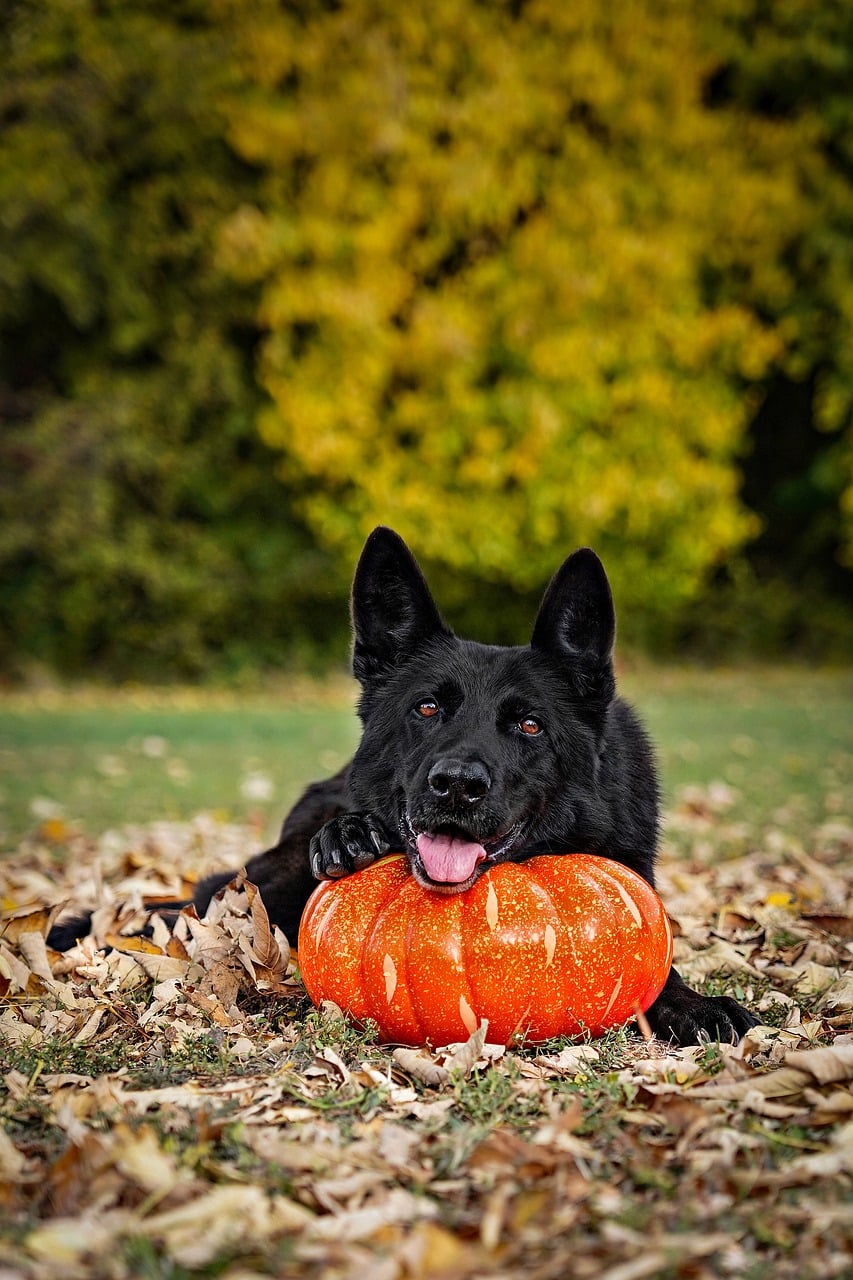
Pumpkin: Plain Is Different From Pumpkin Pie
Plain pumpkin is safe for most healthy dogs in reasonable amounts. Plain canned pumpkin is also useful because it is easy to portion. Check the label. You want plain pumpkin. Pumpkin pie filling is a different product. It may contain sugar, fat, spices and other ingredients you did not intend to feed. Fresh pumpkin flesh is also appropriate when it is fresh and prepared in manageable pieces. Do not let dogs chew hard stems or large pieces of rind. And a pumpkin that has been sitting outside for days, growing mold and collecting candle residue, is no longer a fresh pet treat.
Sweet Potato
Plain cooked sweet potato is another easy holiday food to share. Skip:
- Butter.
- Marshmallows.
- Brown sugar.
- Candied toppings.
- Heavy seasoning.
The dog does not need the casserole. They need a small piece of the ingredient before it became dessert.
Green Beans
Plain green beans are appropriate for many dogs. Again, separate the vegetable from the casserole. Plain green beans and green bean casserole are not nutritionally equivalent experiences.
Apples
Plain apple slices can be used as treats. Remove the core and seeds. Cut pieces to a size appropriate for your dog.
The 10 Percent Rule Still Matters
Holiday foods and homemade treats should remain treats. They are not intended to replace a complete and balanced diet. A practical guideline is to keep treats and extras to less than about 10 percent of the dog's daily calories unless a veterinary nutrition plan specifies otherwise. That leaves the dog's regular food doing the nutritional heavy lifting.
Pet-Safe Fall Recipe 1: Pumpkin Turkey Dinner Topper
This is a topper. It is not a replacement diet.
Ingredients:
- Plain cooked turkey breast.
- Plain pumpkin puree.
- Your dog's regular food.
Directions:
Chop a small amount of plain turkey into bite-sized pieces. Mix a spoonful of plain pumpkin into your dog's normal meal. Add a few turkey pieces. Serve the dog's normal meal amount rather than creating a second Thanksgiving dinner.
Why I like it: The dog participates. The ingredients are simple. Portions stay controlled. Their normal balanced diet remains the main meal.
Pet-Safe Fall Recipe 2: Pumpkin Oat Training Bites
Ingredients:
- 1 cup plain pumpkin puree.
- 2 eggs.
- Approximately 2½ cups oat flour.
Directions:
Preheat oven to 350°F. Mix pumpkin and eggs. Add oat flour gradually until you have a workable dough. Roll thin. Cut into very small training-size pieces. Bake approximately 20 to 25 minutes or until firm. Cool completely. Refrigerate or freeze extras.
Trainer Tip: Make them tiny. Training treats do not need to look like cookies. A dog receiving 30 reinforcement opportunities does not need 30 full-size biscuits.
Pet-Safe Fall Recipe 3: Turkey and Sweet Potato Bites
Ingredients:
- 1 cup plain cooked sweet potato.
- ½ cup finely chopped plain cooked turkey.
- 1 egg.
- Enough oat flour to create a soft workable mixture.
Directions:
Mix ingredients. Form small bite-size pieces. Bake at 350°F until firm and cooked through. Cool completely. Use as occasional treats. Keep portions small.
Pet-Safe Fall Recipe 4: Frozen Pumpkin Enrichment
Ingredients:
- Plain pumpkin puree.
- A portion of your dog's regular food.
- Water as needed for texture.
Directions:
Mix a small amount of pumpkin with part of your dog's regular meal. Place it into an appropriate food toy, lick mat or enrichment feeder. Freeze. Offer when your dog is comfortable using that enrichment item. This works especially well during holiday gatherings when the dog benefits from an appropriate activity away from the dinner table.
Recommended Feeding and Enrichment Tools
For slow feeders, interactive feeders, lick mats, enrichment toys, holiday enrichment tools and everyday dog recommendations: Legend Acres Shop.
Can Horses Eat Pumpkin?
Yes. Plain orange pumpkin can be offered to many healthy horses as an occasional treat. The seeds are also considered edible. The important questions are:
- Is it fresh?
- Is it plain?
- Is it an edible orange pumpkin?
- Is it cut into a safe size?
- How much are you offering?
How to Give Pumpkin to a Horse Safely
Use fresh orange pumpkin. Cut it into manageable pieces. Introduce it gradually if your horse has never eaten pumpkin. Offer one piece at a time. Keep pumpkin in the treat category rather than replacing forage or the horse's established ration. Michigan State University Extension recommends small portions rather than allowing horses to consume large amounts at once. Some horses love pumpkin. Some inspect it and walk away. Both responses are normal.
Do Not Hand Your Horse a Whole Pumpkin
A horse may bite and break apart a pumpkin safely. A greedy horse may also attempt to swallow a small pumpkin or an oversized piece. Choke is the concern. Cut pumpkin into manageable pieces. Remove the stem.
What Parts of an Orange Pumpkin Can Horses Eat?
For fresh edible orange pumpkin:
- The flesh is edible.
- The skin is generally edible.
- The seeds are edible.
- The stem should be removed.
The safest practical approach is still sliced pieces rather than handing over a whole pumpkin.
Do Not Feed the Old Jack-O'-Lantern
A pumpkin used as a decoration is not automatically horse food when Halloween ends. Do not feed pumpkins that are:
- Moldy.
- Rotting.
- Soft or spoiled.
- Painted.
- Covered in glitter.
- Treated with chemicals.
- Contaminated with candle wax.
- Containing candle hardware.
- Decorated with non-food materials.
The pumpkin you would not feed fresh should not become barn disposal.
Pumpkin Is Enrichment Too
A safe seasonal food can provide more than calories. New scents. Textures. Foraging. Exploration. Choice. You do not need to force your horse to eat pumpkin because social media says horses love it. Offer it. Let the horse investigate. The horse decides whether pumpkin belongs on the menu.
Can Every Horse Have Pumpkin?
Not every animal needs every treat. A horse already following a condition-specific feeding plan should stay on that plan. Horses with metabolic concerns, special dietary restrictions, choke history, dental limitations or other individual considerations need treats selected around those needs. The fact that pumpkin is generally safe does not make it automatically appropriate for every individual horse.
Pet-Safe Does Not Mean Unlimited
This applies to dogs and horses. Safe foods still have portions. New foods may still cause gastrointestinal upset. A safe ingredient may become unsafe because of:
- Quantity.
- Preparation.
- Seasoning.
- Fat.
- Mold.
- A pit.
- A bone.
- A cob.
- A hard rind.
- A large swallowable piece.
- The container.
- The wrapper.
- The animal's health history.
That is practical pet nutrition.
What if Your Dog Ate Something You Are Not Sure About?
Get the package. Identify the ingredient. Estimate the amount. Know approximately when it happened. Know your dog's weight. Watch for changes. If you are unsure whether the exposure needs veterinary attention, use the Legend Acres Vetster referral for 24/7 veterinary guidance. If your dog is experiencing an immediately life-threatening emergency, go directly to an emergency veterinary hospital.
Food Behavior Matters Too
Thanksgiving also teaches dogs what works around the table. If ten people secretly feed your dog from their plates, your dog learned something. Approaching the table worked. Staring worked. Pawing worked. Jumping worked. Following guests worked. That is not the dog being manipulative. That is reinforcement.
Prevention: Decide what guests may feed. Give them approved treats if they want to interact. Manage access to the kitchen and table.
Behavior Modification: Teach mat work. Settling. Leave It. Waiting. Moving away from the table.
Recovery: After the meal and guests leave, return the dog to their normal food, elimination, activity and sleep routine.
Need More Than Holiday Tips?
If food guarding, counter surfing, table behavior, visitor behavior, reactivity or holiday stress is becoming difficult to manage, schedule a FREE Dog Behavior Consultation.
Ready to Learn Now?
Explore Legend Acres online training and behavior education.
Shop Legend Acres Recommendations
Find our seasonal recommendations, Amazon storefront collections, everyday training gear, enrichment tools, feeders, puppy supplies and horse essentials: Legend Acres Shop.
Frequently Asked Questions
Can Dogs Eat Turkey?
Plain cooked turkey meat is appropriate for many dogs in small amounts. Remove bones and avoid large servings of fatty skin, drippings, gravy and heavily seasoned meat.
Will One Piece of Turkey Skin Cause Pancreatitis?
A single small piece does not mean pancreatitis is inevitable. Risk becomes more concerning with larger amounts of fatty foods, repeated high-fat feeding and dogs with individual susceptibility or a history requiring dietary fat restriction.
Can Dogs Eat Corn?
Plain corn kernels removed from the cob are generally safe in moderation. Do not give dogs corn cobs. Swallowed cob pieces can create serious gastrointestinal obstruction.
Can Dogs Eat Pumpkin?
Plain fresh or canned pumpkin is appropriate for many dogs in reasonable amounts. Choose plain pumpkin rather than pumpkin-pie filling.
What Are the Three Holiday Foods I Watch Most Closely?
Around candy and dessert tables, xylitol, grapes/raisins and chocolate deserve immediate attention because they present true toxicology concerns. Other toxic foods also exist, including members of the onion and garlic family. The goal is understanding the actual hazard rather than assuming every human food carries the same risk.
Can Horses Eat Pumpkin?
Yes. Fresh edible orange pumpkin, including the seeds, is generally safe as an occasional horse treat. Cut it into manageable pieces, remove the stem and do not feed moldy, painted, wax-contaminated or rotten pumpkins.
Can a Horse Eat a Whole Pumpkin?
Offering slices is safer. A horse may attempt to swallow a small whole pumpkin or large piece and develop choke. Use manageable portions instead.
Can I Give My Horse My Jack-O'-Lantern After Halloween?
Only if it remains fresh and has never been contaminated by paint, glitter, candle wax, mold, rot or other decorative materials. In practice, a fresh unused pumpkin is the better choice.
Where Can I Find the Feeding and Enrichment Products Legend Acres Recommends?
https://www.legend-acres.com/shop
ABOUT LEGEND ACRES
Legend Acres provides Force-Free, Fear-Free, Bond-Based, science-backed dog and horse education. We believe good pet education should help you understand why something is safe, why something is risky and what the actual mechanism is. Not every table scrap is poison. Not every natural food is safe. Not every risk comes from toxicity. Sometimes the problem is quantity. Sometimes it is fat. Sometimes it is the bone, cob, wrapper, pit, stem or size of the piece. Better information creates better decisions.