
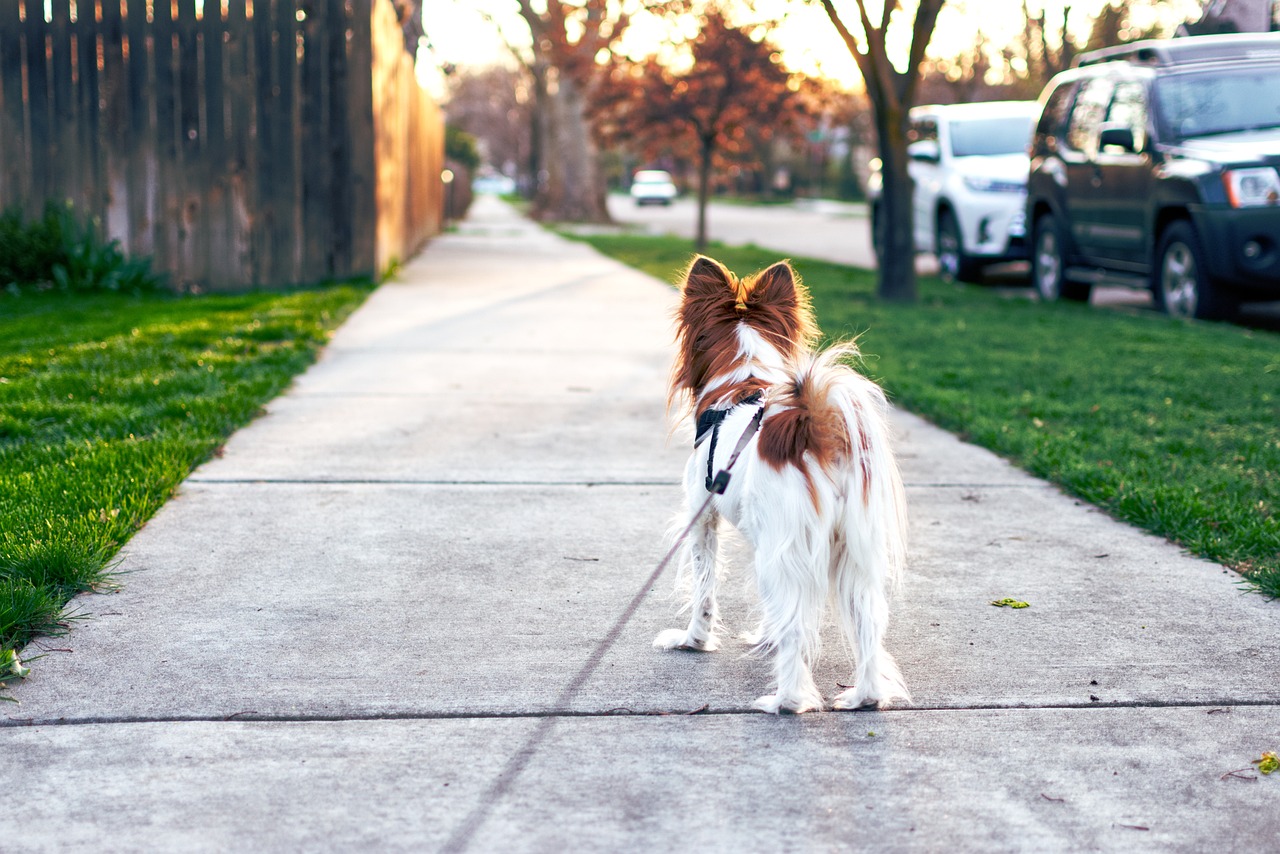
Your dog sees another dog. Their body changes. They stare. Pull forward. Whine. Bark. Lunge. Maybe they growl. Maybe the other owner crosses the street. And someone says: 'Your dog is reactive.' That describes what happened. It does not tell us why. Reactivity is not one diagnosis. It is a useful description for an increased behavioral response to something in the environment. The dog may be afraid. Frustrated. Excited. Conflicted. Overaroused. Trying to increase distance. Trying to decrease distance. Responding from an established learning history. Or experiencing several of those processes at the same time. That distinction matters because the behavior plan should address the dog in front of us, not the label.
What Does "Reactive Dog" Mean?
People commonly use 'reactive' to describe dogs who respond intensely to particular things in the environment. That response may include:
- Barking
- Lunging
- Whining
- Pulling
- Staring
- Freezing
- Growling
- Snarling
- Jumping
- Spinning
- Difficulty disengaging
- Trying to retreat
- Trying to rush forward.
- The trigger might be:
- Another dog
- A person
- A bicycle
- A skateboard
- A vehicle
- A fence
- Wildlife
- Children
- Someone wearing unusual clothing
- Movement
- A particular sound.
Reactivity tells us there is a response. We still need to determine what is driving it.
Current Research Supports Looking Beyond the Label
Current canine-behavior research is becoming more specific about what owners often group together as 'reactivity.' A 2026 AAHA review discussed research separating reactive behaviors into different components, including frustration-related behaviors such as barking, lunging, and whining, threat-related posturing, and oral behaviors such as snapping, nipping, or biting. Those components did not carry identical risk profiles. That matters. A dog barking and lunging because access to another dog is blocked is not automatically experiencing the same thing as a dog displaying escalating threat behavior and making contact. The behaviors may look dramatic from twenty feet away. The underlying emotional process and risk may be different.
Fear and Frustration Are Not the Same Emotion
Recent 2026 research has also emphasized the importance of distinguishing fear and frustration in clinical animal behavior. Both may contribute to behavior owners call reactive. They do not necessarily require the same intervention. Fear generally involves responding to something the animal perceives as threatening or unsafe. Frustration occurs when access to something expected or desired is blocked or when the animal cannot resolve the situation effectively. Some dogs experience both. A dog may want to approach another dog and also feel uncertain when the interaction becomes closer. This is why watching the entire behavior sequence matters more than deciding from one bark what the dog 'must' be feeling.
"My Dog Barks at Other Dogs"
That is useful information. Now we need more. When does the barking start? At 100 feet? Twenty feet? Only when another dog approaches directly? Only on leash? Only behind the fence? Does your dog pull toward the other dog? Try to move away? Freeze first? Whine? Recover after the dog passes? Can they take food? Can they sniff? Can they look away? Do they react differently to familiar dogs? Those details help us understand the behavior.
Is My Dog Reactive or Aggressive?
These terms are not interchangeable. Reactivity describes a heightened response. Aggressive behavior may include:
- Growling
- Snarling
- Snapping
- Biting
- Threatening postures
- Contact intended to increase distance or respond to conflict.
A reactive dog may display aggressive behavior. Another reactive dog may bark and lunge without progressing to contact behavior. A third dog may become quiet and stiff before escalating. Do not use volume alone to judge risk. A loud dog is not automatically the highest-risk dog. A quiet dog is not automatically safe. Current research suggests oral contact behaviors and certain threat-related postures provide different risk information than frustration-related barking and lunging alone.
Is My Dog Being Dominant?
Dominance is one of the most common explanations given for barking and lunging. It is rarely a useful starting point for a behavior plan. Instead, ask:
- What happened?
- What was the trigger?
- What distance was involved?
- What did the dog do first?
- What did the dog do next?
- What consequence followed?
- Did the trigger move closer?
- Move away?
- Did the dog gain access?
- Did the handler tighten the leash?
- What happened during recovery?
Observable information gives us something useful to change.
Is My Dog Being Stubborn?
A dog who stops responding around another dog may not be choosing defiance. The environment may exceed the dog's current learning ability. Instead of: 'My dog knows Sit but refuses when another dog is nearby.' Try: 'My dog performs Sit comfortably without another dog present but cannot respond when another dog is approximately twenty feet away.' Now we know the behavior changes with environmental difficulty. That is useful training information.
What Is Leash Reactivity?
Leash reactivity refers to reactive behavior occurring while the dog is restrained or walking on leash. The leash itself is not necessarily the emotional cause. But restraint changes what the dog can do. A dog cannot freely:
- Increase distance
- Approach
- Move in an arc
- Pause
- Investigate
- Choose another route.
That can influence frustration, fear, or conflict. A dog who interacts comfortably off leash is not automatically comfortable when physically restricted. And a dog who appears social off leash is not automatically safe for unrestricted interactions. Context matters.
What Is a "Frustrated Greeter"?
People commonly use 'frustrated greeter' for a dog who appears to want social access but barks, whines, pulls, or lunges because the leash prevents them from reaching the other dog or person. The concept is useful. The label still should not replace observation. Grisha Stewart, who developed Behavior Adjustment Training, has moved toward describing the behavior and frustration rather than relying heavily on fixed labels because some dogs showing frustration also show fear or conflict. A dog may want access and still feel uncertain. Behavior is often more complicated than one category.
Why Does My Dog React Behind a Fence?
Barriers change behavior too. A fence prevents normal movement and may increase:
- Frustration
- Arousal
- Territorial responding
- Anticipation
- Repeated barking
- Fence running.
The behavior may also become highly practiced. Dog sees passerby. Dog runs and barks. Passerby leaves. From the dog's perspective, barking has been followed repeatedly by the person or dog moving away. That learning history matters.
Why Does My Dog React to Cars or Bicycles?
Moving objects create a different behavioral picture. Possible contributors include:
- Movement sensitivity
- Chasing behavior
- Fear
- Startle
- Frustration
- Arousal
- Previous learning.
Do not assume the motivation based on the object alone. We still look at:
- Distance
- Speed
- Direction
- Body language
- Recovery
- Environmental history.
Why Did My Dog Suddenly Become Reactive?
A sudden behavior change deserves attention. Possible contributors include:
- Pain
- Medical illness
- Sensory changes
- Developmental stage
- A frightening event
- Repeated stressful exposure
- Changes in environment
- Learning history
- Social maturity.
AAHA guidance identifies newly developing fear, aggression, increased reactivity, elimination changes, and major activity changes as behaviors that may warrant veterinary assessment. If reactivity appeared suddenly or changed significantly alongside pain, mobility changes, appetite changes, elimination changes, sleep changes, or other physical signs, start with veterinary guidance. Legend Acres Vetster referral: Vetster veterinarian online
The Legend Acres Three-Part Behavior Framework
At Legend Acres, we approach reactive behavior through three connected areas: Prevention. Behavior Modification. Recovery. All three matter.
1. Prevention: Get in Front of the Behavior
Prevention means reducing unnecessary rehearsal and setting up the environment so your dog has a better chance of succeeding. That may include:
- Crossing the street.
- Turning around.
- Choosing quieter walking times.
- Increasing distance.
- Using visual barriers.
- Avoiding narrow pathways.
- Waiting before exiting the car.
- Moving away from a fence.
- Skipping an inappropriate greeting.
- Using secure equipment.
- Choosing a quieter veterinary appointment.
- Giving the dog room to process the environment.
Prevention is not giving up. It protects safety while behavior modification develops new skills.
Distance Is a Behavior Tool
One of the most useful immediate tools for reactive dogs is distance. If your dog cannot:
- Eat
- Sniff
- Look away
- Respond to familiar communication
- Move with you
- Recover.
You may be too close to the trigger for productive learning. Increasing distance is not rewarding bad behavior. It changes the environment so the dog has a better opportunity to process information.
2. Behavior Modification: Change the Response
Behavior modification works on the response itself. Depending on the individual dog, the plan may involve:
- Desensitization
- Counterconditioning
- Behavior Adjustment Training
- Reinforcing disengagement
- Building handler communication
- Changing environmental setup
- Teaching movement away from triggers
- Developing loose-leash skills
- Improving frustration tolerance
- Creating more appropriate social opportunities
- Building confidence.
The exact plan depends on why the behavior is happening.
What Is Behavior Adjustment Training?
Legend Acres uses Behavior Adjustment Training as one component of behavior-modification education. BAT was developed by Grisha Stewart for dogs experiencing fear, frustration, aggression, and related reactive responses. Current BAT 3.0 emphasizes creating emotionally safer environments, giving the dog meaningful agency, allowing natural exploration, using appropriate distance, and helping the dog develop socially appropriate choices without forcing interaction. The goal is not to drag a dog closer until they stop reacting. The goal is to create conditions where the dog can observe, gather information, make safer choices, and learn.
Why Choice Matters
Imagine your dog sees another dog at a distance. Instead of pulling them directly toward it, the environment gives your dog room to:
- Look
- Pause
- Sniff
- Turn away
- Move laterally
- Increase distance
- Check in
- Continue exploring.
Those choices give us information. They also reduce the need for the dog to use barking and lunging as their primary strategy.
Do I Need to Make My Reactive Dog Socialize?
No. Your dog does not need to greet every dog. They do not need to prove they are friendly. They do not need to attend a dog park. They do not need to tolerate another dog entering their personal space. For many dogs, neutrality is a far better goal. Another dog exists. Your dog notices. Your dog remains able to function. Then life continues.
Should I Correct Barking or Lunging?
Punishing the visible behavior does not necessarily change the underlying emotion. A dog who stops barking because barking predicts an aversive consequence may still feel fear, frustration, or conflict. AVSAB's current humane-training position recommends reward-based methods for behavior modification and specifically advises that fear, anxiety, and aggression concerns require environmental management and an appropriate treatment plan rather than aversive techniques. Our goal is not silence at any cost. Our goal is safer behavior and improved emotional regulation.
3. Recovery: The Part Many Behavior Plans Miss
The reactive episode ends. The other dog disappears. Your walk continues. What happens next? Can your dog:
- Sniff?
- Eat?
- Shake off and soften?
- Look back at you?
- Return to exploration?
- Resume normal movement?
- Settle when you get home?
- Sleep?
Or do they remain:
- Hypervigilant?
- Panting?
- Scanning?
- Unable to eat?
- Pulling?
- Sound-sensitive?
- Restless?
Recovery tells us how difficult the experience was.
Why Recovery Changes the Training Plan
Consider two dogs. Both bark for ten seconds when another dog passes. Dog A sniffs the ground thirty seconds later and continues walking normally. Dog B scans the environment for the next twenty minutes and reacts to every movement. The visible barking looked similar. The recovery did not. That difference matters. AAHA behavior guidance specifically identifies failure to recover quickly from frightening stimuli as clinically meaningful when evaluating behavior and development.
Trigger Stacking and Reactive Dogs
Your dog may handle one difficult event. Then another. Then another. The reaction you see at the fourth trigger may reflect accumulated stress from the first three. For example:
- Dog passes.
- Truck backfires.
- Child runs toward the dog.
- Bicycle approaches.
- Then another dog appears.
The owner says: "He was fine until that last dog." Maybe. Or the dog's ability to cope was becoming progressively smaller. Recovery time between difficult events matters.
Can Reactive Dogs Improve?
Yes, behavior can change. The appropriate goal depends on the individual dog. For one dog, improvement may mean walking past another dog across the street. For another, it may mean recovering faster. For another, it may mean calmly observing from fifty feet. For another, it may mean learning to disengage instead of lunging. For another, it may mean the owner recognizing the early signs and leaving before escalation. We do not promise that every dog will become social with every person or dog. That is not necessary for a successful life.
Should a Reactive Dog Attend Group Classes?
Sometimes. Not every reactive dog belongs in a standard group class. Ask:
- Can the dog remain far enough from triggers to learn?
- Can the dog take reinforcement?
- Can they recover?
- Can the environment be managed safely?
- Does the class format match the dog's current needs?
- Will the dog spend the entire class over threshold?
A dog who spends an hour barking and lunging at other dogs is not getting productive socialization simply because they are physically present in a group class. The appropriate starting point may be:
- Private behavior work.
- A behavior-modification workshop.
- Online education.
- Controlled setups.
- A carefully managed group environment.
Assessment comes first.
Reactivity Is Not a Socialization Exercise
More exposure is not always better. Repeated exposure at a level where the dog is overwhelmed may give the dog additional opportunities to practice the very response you are trying to change. Good exposure means the dog is able to process the experience. Distance. Duration. Intensity. Choice. Recovery. All matter.
What Can I Do on Today's Walk?
Start with practical changes.
- Bring appropriate reinforcement.
- Choose a route with room to move.
- Scan ahead.
- Create distance early.
- Do not wait for the leash explosion.
- Skip unnecessary greetings.
- Allow sniffing.
- Reward disengagement.
- Use visual barriers when needed.
- Turn around when the environment becomes too difficult.
- Protect recovery after a difficult event.
One successful shorter walk may teach more than one long walk filled with repeated reactions.
What Information Should I Track?
Keep a simple behavior log. Record:
- Trigger.
- Approximate distance.
- What happened immediately before the reaction.
- First behavior you noticed.
- Whether your dog accepted food.
- Whether your dog could move away.
- Duration of the reaction.
- How long recovery took.
- What helped.
- What made it harder.
Patterns become easier to see when we stop relying on memory alone.
When Should Veterinary Input Be Part of the Plan?
Behavior and medicine overlap. Seek veterinary guidance when:
- Reactivity begins suddenly.
- Behavior changes significantly.
- Touch sensitivity appears.
- Mobility changes.
- Sleep changes.
- Appetite changes.
- Elimination changes.
- Your dog appears painful.
- An older dog develops new reactivity.
- The dog cannot settle.
- The behavior changes after medication or illness.
For veterinary guidance: Vetster veterinarian online
When Should I Get Professional Behavior Help?
Seek individualized support when:
- Barking or lunging is increasing.
- Growling, snapping, or biting occurs.
- You struggle to physically manage the dog.
- Your dog cannot recover after triggers.
- Walks have become difficult or unsafe.
- Your dog is reacting at increasing distances.
- You are avoiding normal activities.
- Children or vulnerable adults are involved.
- You do not know whether the behavior involves fear, frustration, aggression, or another concern.
- You have tried general training advice without meaningful progress.
Our behavior team can help you build a plan that meets your dog's specific needs.
Choose the Behavior Modification Option That Fits Your Dog
Start With the Online Behavior Modification Workshop
If you want to understand what is driving your dog's barking, lunging, fear, frustration, or reactive behavior and begin learning the Legend Acres behavior-modification system at home, start with our online workshop: Behavior Modification Foundations: Reactivity, Aggression, BAT 2.0 & Bubble Theory. The workshop covers foundational behavior concepts, BAT, Bubble Theory, counterconditioning, reactivity versus aggression, setup, observation, and practical behavior-modification tools you can begin using with your dog. Explore the Online Behavior Modification Workshop: Online Behavior Modification Workshop
Prefer an In-Person Behavior Modification Workshop?
Legend Acres also offers an in-person Behavior Modification Workshop in Arizona. The workshop focuses on helping owners understand reactive behavior, set up appropriate training situations, use the Legend Acres behavior log, and begin helping their dog become more confident and successful in the environment. Current Arizona Behavior Modification Workshops and registration: Arizona Behavior Modification Workshops and registration
Need More Individual Support?
Some dogs need more than a workshop. Private Behavior Modification sessions are appropriate when the dog needs controlled individualized work around leash reactivity, people, dogs, environmental triggers, fear, frustration, or aggressive behavior. Current Arizona private and workshop options: Arizona Dog Training Tennessee Behavior Modification options: Tennessee Dog Training
Not Sure Which Option Fits?
Schedule a FREE Dog Behavior Consultation. We will review what you are seeing and help determine whether your next step should be the online workshop, in-person workshop, private Behavior Modification, Fundamentals, another training pathway, or veterinary input. Schedule a Free Dog Behavior Consultation
Want to Start Learning at Home?
Explore Legend Acres online dog training and behavior education: Online Dog Training | Legend Acres
Frequently Asked Questions
Why Does My Dog Bark at Other Dogs?
Barking may involve fear, frustration, excitement, overarousal, conflict, environmental history, or another process. Observe what happens before, during, and after the barking rather than assuming one motivation.
Is Leash Reactivity the Same as Aggression?
No. A dog may bark and lunge on leash because of frustration, fear, or another emotional process without progressing to biting. Some reactive dogs also display aggressive behavior. Risk should be assessed from the complete behavior pattern.
Can a Reactive Dog Improve?
Behavior can improve through appropriate management, learning, environmental changes, behavior modification, and recovery support. The appropriate goal varies by dog.
Should I Let My Reactive Dog Meet More Dogs?
Not automatically. Forced or overwhelming exposure may increase stress and rehearsal of unwanted responses. Many dogs benefit more from neutral, controlled exposure at appropriate distances.
Should I Punish My Dog for Barking or Lunging?
Legend Acres does not use punishment-based approaches for reactivity. The goal is to understand the behavior, prevent unnecessary rehearsal, change the learned or emotional response, teach useful skills, and support recovery.
What Is BAT?
Behavior Adjustment Training is a force-free behavior-modification approach developed by Grisha Stewart. Current BAT emphasizes appropriate distance, natural exploration, agency, safe setups, and helping dogs make more socially appropriate choices around triggers.
How Do I Know if My Dog Is Over Threshold?
Signs may include inability to eat, inability to disengage, intense staring, escalating vocalization, lunging, freezing, hypervigilance, loss of previously reliable responses, or difficulty recovering. Threshold is individual and changes with context.
Should My Reactive Dog Go to Group Class?
It depends on whether the environment allows the dog to remain safe and able to learn. Some dogs benefit from group environments. Others need private or controlled behavior-modification work first.
Where Should I Start?
If you are unsure whether your dog needs Fundamentals, Behavior Modification, private training, group training, or veterinary input, schedule a FREE Dog Behavior Consultation: Schedule a Free Dog Behavior Consultation
About Legend Acres
Legend Acres Dog & Horse Behavior Solutions provides Force-Free, Fear-Free, Bond-Based, science-backed dog training and behavior education. Our behavior approach looks beyond the visible reaction. We examine the environment. The learning history. The dog's communication. The likely emotional processes. The handler's response. And recovery. Reactive behavior is not one diagnosis. Understanding what is happening gives us a better place to start.